-
Solutions

Timesheets Management
Stop leaving money on the table. Procxo's AI integrated time tracking operates in the background.
Project Management
Procxo connects all the work your team does with the money your firm makes. Manage your deadlines, assignments, and budgets.
Invoice Management
Turn days of manual reconciliation into a single click. Procxo works in the background to automatically.
Contract Lifecycle Management
Accelerate negotiations, govern service level agreements (SLAs), and execute agreements flawlessly. Procxo unifies drafting.
-
Resources
Blogs
Read our latest insights, articles, and updates. Stay informed with industry trends and perspectives.
Case Studies
Explore real examples of our work and impact. See how we solve complex challenges.
Why Procxo
Built to streamline projects, billing, and financial workflows. Helping service professionals work smarter and grow faster.
FAQs
Browse answers to frequently asked questions. Find clear information about our services and processes.


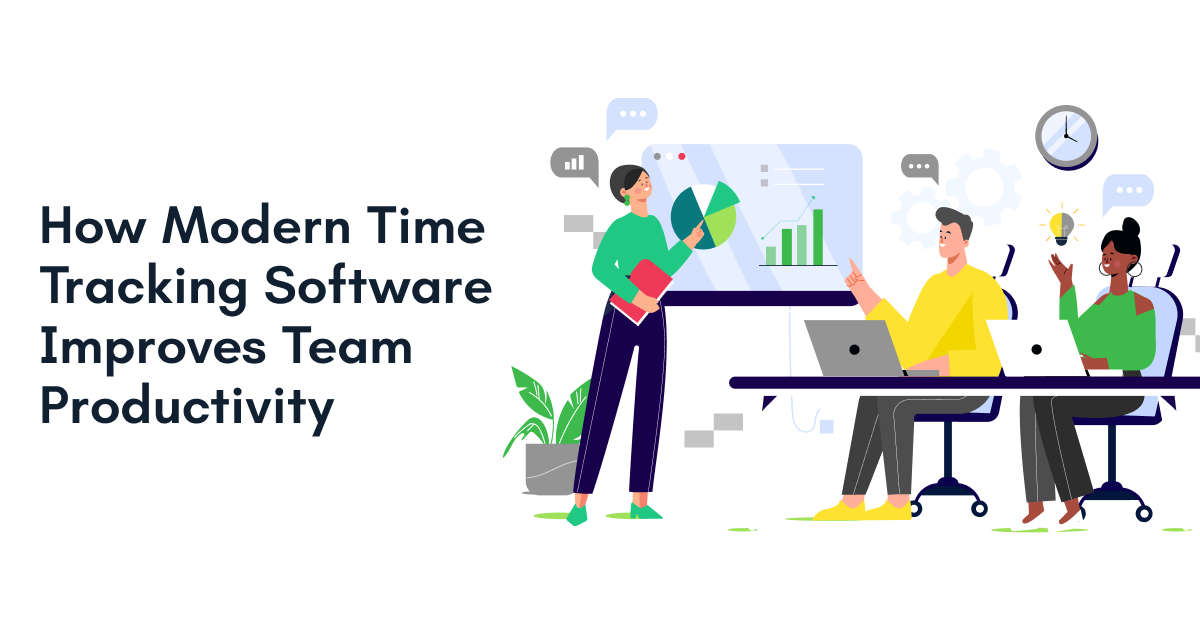
Managing a team today is more complicated than ever. Employees work across different locations, projects overlap, deadlines keep tightening, and managers are constantly trying to balance productivity with employee well-being.
The challenge isn’t that teams aren’t working hard. The challenge is visibility. Without understanding where time is spent, businesses often struggle with missed deadlines, budget overruns, uneven workloads, and declining productivity.
This is where time tracking software becomes a game-changing solution. Modern platforms are no longer simple clock-in and clock-out tools. They provide real-time insights into employee performance, project progress, resource allocation, and operational efficiency.
Whether you’re a growing startup, an enterprise organization, or a remote-first company, the right time tracking solution can help transform how work gets done.
Key Takeaways
- Time tracking helps businesses identify productivity bottlenecks.
- Managers gain real-time visibility into project progress.
- Teams can improve accountability without micromanagement.
- Accurate data supports smarter workforce planning.
- Automated tracking reduces administrative effort.
- Businesses can improve profitability by optimizing resource allocation.
- Modern solutions support remote, hybrid, and in-office teams.
What Are the Hidden Productivity Challenges?
Before organizations look for solutions, they first need to understand the problems affecting team performance.
The Common Workplace Bottlenecks Include:
- Unclear project timelines: Managers often struggle to understand how long tasks actually take.
- Workload imbalance: Some employees are overloaded while others have available capacity.
- Manual reporting errors: Traditional spreadsheets create inaccuracies and wasted effort.
- Limited project visibility: Teams may not know the status of critical deliverables.
- Scope creep: Projects expand beyond original estimates without anyone noticing.
When these issues go unnoticed, organizations experience delayed project delivery, inaccurate forecasting, higher labor costs, and lower employee engagement. making visibility into work a business necessity rather than an operational preference. These issues also matter because of reduced profitability, employee burnout, and missed deadlines. Which in turn can cause:
- Inefficient time allocation directly impacts business performance.
- Poor workload distribution can increase stress and turnover.
- Lack of visibility often leads to delayed project delivery.
Without accurate time data, organizations make decisions based on assumptions instead of facts.

How Time Tracking Software Creates Visibility Across Teams?
Modern time tracking software automatically records work hours, task progress, project allocation, and resource utilization through digital timesheets, timers, or integrated project management tools. This real-time data creates a centralized view of ongoing work across the organization.
Real-Time Activity Insights
This includes live project tracking where managers can monitor project progress without constant status meetings, task-level visibility where teams can identify which activities consume the most time. It also includes resource allocation tracking where leaders can see where resources are being overused or underutilized.
Better Decision-Making
This includes data-backed planning where future project estimates become more accurate, and performance benchmarking where teams can compare actual versus expected delivery timelines. It also includes operational transparency where everyone works from the same information.
Visibility removes ambiguity and creates a more predictable workflow.
How to Improve Employee Accountability Without Micromanagement?
Many employees worry that time tracking means constant monitoring. In practice, modern solutions focus on project transparency and workload visibility rather than monitoring every individual action.
Encourages Ownership
When employees can see exactly where their time is spent, they become more mindful of their productivity and priorities. This transparency encourages ownership, helping teams stay focused, accountable, and aligned with business goals.
- Clear work records: Employees can easily demonstrate completed work.
- Goal alignment: Teams understand how their efforts contribute to company objectives.
- Personal productivity awareness: Employees gain insights into their own work habits.
Builds Trust
Trust grows when employees and managers have access to the same accurate data. Instead of relying on assumptions or frequent check-ins, time tracking creates transparency that supports fair evaluations and stronger workplace relationships.
- Objective performance discussions: Managers rely on data rather than assumptions.
- Reduced status reporting: Automated reports eliminate unnecessary check-ins.
- Fair evaluations: Work contributions become easier to measure consistently.
Creates Better Habits
Consistent visibility into work patterns helps employees recognize what’s productive and what isn’t. Over time, this awareness encourages better prioritization, improved focus, and more efficient use of working hours.
- Prioritization improvements: Teams spend more time on high-value activities.
- Focus enhancement: Employees identify and reduce time-wasting distractions.
The best systems empower employees rather than monitor them excessively.
Optimizing Projects, Budgets, and Resources
Productivity isn’t just about working faster. It’s about working smarter. Modern timesheet software helps organizations maximize every resource.
Improve Project Planning
Successful projects start with accurate planning, but that’s difficult when teams rely on assumptions rather than real data. Time tracking provides valuable insights into task durations, helping businesses create more realistic timelines and improve project execution.
- Historical data analysis: Future estimates become more accurate.
- Task duration forecasting: Teams know how long similar activities typically require.
- Deadline management: Early warnings help prevent delays.
Control Costs
Untracked time often leads to budget overruns and unexpected expenses. By monitoring where time and resources are being invested, organizations can manage costs more effectively and improve overall project profitability.
- Budget tracking: Compare actual labor costs against project budgets.
- Profitability insights: Identify the most efficient projects and teams.
- Reduced overtime expenses: Monitor workload before burnout occurs.
Better Resource Allocation
Understanding team capacity is essential for maintaining productivity and preventing burnout. Time tracking helps managers distribute workloads more strategically, ensuring the right people are assigned to the right tasks at the right time.
- Capacity planning: Distribute work more effectively.
- Utilization tracking: Identify underused or overloaded team members.
- Scalable staffing decisions: Hire based on actual workload data.
Businesses that understand their time investment make smarter financial decisions.
Why Businesses Are Replacing Manual Tracking Methods?
Spreadsheets and manual logs may seem cost-effective, but they often create more problems than they solve.
Problems with Manual Tracking
Let’s be honest, tracking work hours in spreadsheets or on paper can quickly become a headache. It’s easy to forget entries, make mistakes, or spend way too much time updating records that should be automated.
- Human error: Data inaccuracies are common.
- Time-consuming administration: Employees waste hours updating records.
- Limited reporting: Insights require manual analysis.
- Lack of real-time visibility: Managers work with outdated information.
Benefits of Automation
Automation takes the tedious work off everyone’s plate. Instead of manually logging hours and generating reports, the system does most chunk of the work, giving teams more time to focus on actual work.
- Automatic time capture: Reduce manual data entry.
- Instant reporting: Access actionable insights immediately.
- Integrated workflows: Connect with payroll, project management, and accounting systems.
- Better compliance: Maintain accurate records for audits and labor requirements.
Increased Efficiency
When less time is spent on admin tasks, more time can be spent on high-impact work. Faster approvals, accurate records, and instant reports help teams stay productive without unnecessary back-and-forth.
- Reduced administrative burden
- Faster approvals
- More accurate billing
- Improved operational performance
Automation transforms time tracking from a reporting task into a productivity strategy.
Choosing the Right Time Tracking Software for Long-Term Growth
Not all solutions are created equally. Organizations should choose software that supports both current needs and future growth.
Essential Features to Look For
When choosing a time tracking solution, look for one that can automatically capture work hours, give you real-time visibility into project progress, generate easy-to-understand reports, highlight productivity trends, and let employees track time from anywhere using their mobile devices.
When evaluating vendors, confirm whether the software offers:
- Role-based access controls
- Audit trails, customizable reports
- API integrations
- Mobile applications
- Scalability for growing teams
After all, the best tools are the ones that make work simpler, not adding another task to your team’s to-do list.
Signs a Solution Will Scale
A good indicator that a solution can grow with your business is its ability to adapt as your needs evolve. Features like cloud-based access, seamless integrations with existing tools, advanced reporting, support for multiple teams, and strong security measures ensure that the platform remains effective and reliable whether you’re managing a small team today or a large workforce in the future.
Questions Buyers Should Ask
Before investing in any solution, it’s worth taking a step back and asking a few practical questions. Consider whether the platform can support your business as it grows, integrates smoothly with the tools you already use, is simple enough for employees to adopt, and provides meaningful productivity insights that help you make better decisions, not just collect more data.
The right solution evolves alongside your business and continues delivering value as teams grow.

Comparison Table: Manual Tracking vs Modern Time Tracking Software
| Feature | Manual Tracking | Modern Time Tracking Software |
| Data Accuracy | Prone to errors | Highly accurate |
| Reporting | Manual and slow | Automated and real-time |
| Productivity Insights | Limited | Advanced analytics |
| Project Visibility | Low | High |
| Resource Planning | Difficult | Data-driven |
| Payroll Integration | Manual | Automated |
| Remote Team Support | Limited | Excellent |
| Scalability | Low | High |
According to the American Psychological Association (APA), excessive employee surveillance can negatively impact workplace well-being, while experts emphasize focusing on meaningful outcomes rather than simply monitoring activity. APA expert Tara Behrend notes that productivity monitoring tools should measure actual value creation instead of tracking every employee’s actions. Organizations that use time tracking as a visibility and planning tool, not as a micromanagement system, are more likely to improve performance and employee experience simultaneously.
This reinforces an important principle: the most successful companies use work hours tracker tools to create transparency, optimize operations, and support employees rather than control them.
Conclusion
At the end of the day, productivity isn’t about making employees work longer hours, it’s about helping them work smarter. When teams have better visibility into how time is being spent, it’s easier to eliminate bottlenecks, balance workloads, stay on top of projects, and make informed business decisions.
Organizations looking to improve workforce visibility often use integrated platforms like Procxo. These platforms bring together time tracking, project management, and operational reporting in one place.
Whether you’re managing an in-office, remote, or hybrid team, the right time tracking tool can help you build a more efficient, accountable, and high-performing workplace, without adding unnecessary complexity.
FAQs
Time Tracking Software is a digital solution that records employee work hours, tracks project time, and provides productivity insights to help businesses improve operational efficiency.
It helps managers identify inefficiencies, balance workloads, track project progress, and make data-driven decisions that enhance overall performance.
Yes. It provides visibility into work progress, supports accountability, and improves collaboration across distributed teams.
Most modern timesheet software solutions integrate with payroll, accounting, and project management tools to streamline operations.
Look for automated time capture, reporting dashboards, project tracking, mobile access, integrations, and workforce analytics.
Not when implemented correctly. The best solutions focus on transparency, resource planning, and productivity improvement rather than employee surveillance.

Latest Blogs

16th September, 2026