-
Solutions

Timesheets Management
Stop leaving money on the table. Procxo's AI integrated time tracking operates in the background.
Project Management
Procxo connects all the work your team does with the money your firm makes. Manage your deadlines, assignments, and budgets.
Invoice Management
Turn days of manual reconciliation into a single click. Procxo works in the background to automatically.
Contract Lifecycle Management
Accelerate negotiations, govern service level agreements (SLAs), and execute agreements flawlessly. Procxo unifies drafting.
-
Resources
Blogs
Read our latest insights, articles, and updates. Stay informed with industry trends and perspectives.
Case Studies
Explore real examples of our work and impact. See how we solve complex challenges.
Why Procxo
Built to streamline projects, billing, and financial workflows. Helping service professionals work smarter and grow faster.
FAQs
Browse answers to frequently asked questions. Find clear information about our services and processes.


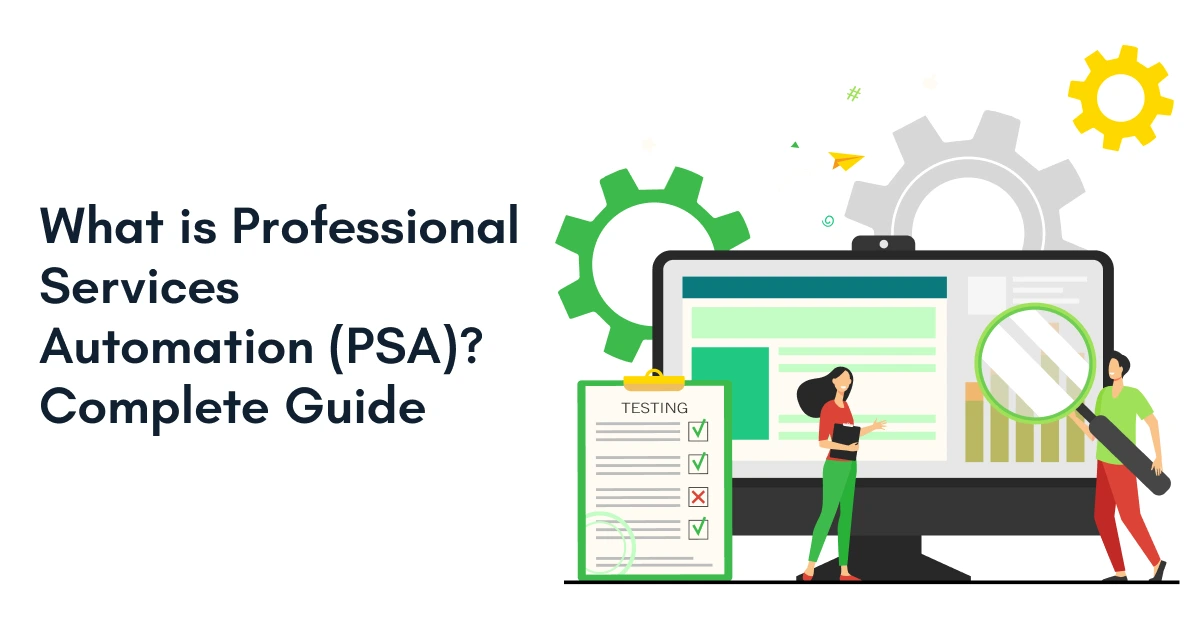
Managing professional services may sound simple. When a project starts, resources get assigned, teams log time, clients receive invoices, and all the stakeholders get paid. But the reality is much different than how it looks.
Project managers work in one tool. Finance teams work in another. Timesheets live somewhere else. Contracts sit inside folders that nobody checks until renewal time. All this results in missed deadlines, incorrect billing, resource conflicts, revenue leakage, and endless spreadsheet updates.
This is exactly why professional services automation has become a critical part of modern service delivery. Whether you run a consulting firm, technology services company, engineering business, or agency, PSA helps connect people, projects, and financial operations in one streamlined ecosystem.
In this guide, you’ll learn what professional services automation is, how it works, why organizations invest in it, and how to choose the right solution for your business.
What Is Professional Services Automation (PSA)?
Professional services automation (PSA) is software that helps organizations manage project delivery, resource allocation, timesheets, billing, contracts, and financial operations from a unified platform.
In simple terms, it gives service businesses a better way to run projects while keeping operations and finance aligned. Instead of using disconnected tools, companies can manage the entire service lifecycle in one place.
As businesses grow, managing services manually becomes harder. PSA solves this challenge by bringing visibility, automation, and accountability into everyday operations.

What Does Professional Services Automation Do?
A PSA platform connects project execution with operational and financial workflows.
It helps teams track work, monitor utilization, manage resources, record time, and invoice clients accurately. It also improves collaboration between project managers, consultants, finance teams, and leadership.
Why Is PSA Different From Traditional Project Management Software?
Project management tools focus mainly on tasks and timelines.
Professional Services Automation goes much further. It connects delivery, finance, contracts, resources, and performance metrics. That means businesses can measure both project progress and profitability.
Which Businesses Use PSA Software?
Many service-oriented organizations rely on PSA platforms. Consulting firms, IT service providers, engineering companies, marketing agencies, legal firms, and managed service providers are common users.
Common Functions of PSA Software
- Resource Management: Matches available talent with project requirements to improve utilization.
- Timesheet Management: Tracks billable and non-billable hours accurately.
- Project Management: Monitors timelines, budgets, milestones, and deliverables.
- Invoice Management: Converts completed work into accurate client invoices.
- Contract Lifecycle Management: Keeps contracts organized, visible, and compliant.
- Financial Visibility: Provides real-time insight into costs, revenue, and profitability.
PSA is not just another project tool. It is an operational framework for managing professional services efficiently.
Why Do Professional Services Businesses Struggle Without PSA?
Many businesses do not realize they have an operational visibility problem until growth exposes it. As project volume increases, manual processes start breaking down. Teams spend more time managing systems than delivering value to clients. This is where the need for professional services automation becomes clear.
Pain Points Service Organizations Face
Without centralized visibility, information gets scattered. Project managers track delivery in spreadsheets. Finance teams manage billing separately. Leadership struggles to understand project profitability. The result is delayed decisions and inconsistent outcomes.
Key challenges include:
- Resource conflicts: Teams struggle to assign the right people to the right projects.
- Revenue leakage: Missed or inaccurate timesheets lead to unbilled work.
- Delayed invoicing: Manual processes slow down cash flow.
- Limited profitability insights: Project costs and margins are difficult to track.
- Duplicate data entry: Employees waste time updating multiple systems.
- Lack of real-time visibility: Leaders cannot make quick, informed decisions.
Disconnected Systems Create Problems
Disconnected tools create duplicate work. Employees enter the same information multiple times. Data mismatches become common. Reporting takes longer than necessary. These inefficiencies grow with every new project.
Resource Allocation Becomes Difficult?
Resource planning is often reactive. Managers cannot easily see availability, workload, or utilization rates. Some employees become overloaded while others remain underutilized. This affects both productivity and profitability.
Day-to-day challenges faced:
- Uneven workloads: High performers often get assigned more work, leading to burnout.
- Skills mismatch: Projects may be assigned to available resources rather than the most qualified ones.
- Limited capacity visibility: Managers struggle to forecast future resource needs.
- Scheduling conflicts: Multiple projects compete for the same resources at the same time.
- Bench time and underutilization: Available talent is not used effectively.
According to the Project Management Institute (PMI), organizations continue to focus on improving project performance through better visibility, resource management, and technology-enabled decision-making. Effective project governance and integrated systems help improve delivery outcomes and business value.
How Does Professional Services Automation Improve Project Delivery?
Once businesses understand their operational challenges, the next step is identifying how PSA addresses them. The biggest benefit is control. Instead of managing projects through disconnected processes, teams work from a shared source of truth.
Smarter Planning
Planning becomes more predictable with PSA. Managers can view resource availability, project timelines, budgets, and workloads before assigning work. This reduces scheduling conflicts and capacity issues.
Key advantages:
- Capacity Planning
- Workload Balance
- Budget Control
- Risk Reduction
Financial Control
Financial data becomes part of project execution. Organizations can track project costs, billable hours, revenue, and profitability in real time rather than waiting for month-end reports.
Key advantages:
- Cost Tracking
- Profit Monitoring
- Faster Invoicing
- Cash Flow
Workflow Automation
Project automation removes repetitive administrative tasks. Approvals, notifications, invoicing workflows, timesheet reminders, and reporting processes can be automated to reduce manual effort.
Key advantages:
- Smart Notifications
- Report Generation
- Reduced Admin Work
Unified Collaboration
Information flows smoothly across teams and departments through PSA. Project teams, finance departments, operations leaders, and executives have access to consistent information. This improves communication and decision-making.
Key advantages:
- Shared Visibility
- Data Consistency
- Team Alignment
- Cross-Functional Access
- Faster Decisions
PSA vs Traditional Project Management Software
| Feature | Project Management Software | Professional Services Automation |
| Task Management | Yes | Yes |
| Resource Planning | Limited | Advanced |
| Timesheet Tracking | Basic | Comprehensive |
| Invoice Management | No | Yes |
| Contract Management | No | Yes |
| Financial Visibility | Limited | Real-Time |
| Profitability Tracking | No | Yes |
| End-to-End Service Management | No | Yes |
PSA helps businesses move from managing projects to managing outcomes.
Key Takeaways
- Professional Services Automation (PSA) helps service-based businesses manage projects, resources, timesheets, invoices, and contracts from one system.
- It reduces manual work, data silos, and operational delays.
- Modern PSA software improves project visibility, profitability, and team productivity.
- Organizations use PSA platforms to connect project delivery with financial outcomes.
- The right solution supports the entire service lifecycle, from project planning to invoicing.
- Integrated platforms like Procxo help unify project management, timesheets, invoices, contracts, and financial visibility without duplicate data entry.

How Can You Choose the Right Professional Services Automation Solution?
By this stage, the value of PSA is clear. The next question is choosing a solution that fits your business today and supports growth tomorrow. You should choose a platform that suits your business rather than a generic one.
Essential Features
Focus on business outcomes rather than feature lists. The best solution should simplify workflows, improve visibility, and connect operational data across systems.
Look for features such as:
- System Integrations: Connect ERP, finance, CRM, and other business tools.
- Contract Management: Track obligations, renewals, and compliance.
- Project Tracking: Monitor progress, budgets, and milestones in real time.
- Real-Time Reporting: Access actionable insights instantly.
Integrated Operations
Integration prevents data silos. Modern organizations use ERP systems, finance platforms, CRM software, and project tools. A PSA platform should work without any obstacles with these systems to create a unified ecosystem.
Through unified data management, you get:
- Real-Time Synchronization: Update records automatically across platforms.
- Reduced Data Entry: Minimize manual work and errors.
- Improved Accuracy: Ensure reliable reporting and decision-making.
- Scalable Operations: Support growth without adding complexity.
The right professional services automation platform helps organizations move beyond managing day-to-day tasks and focus on delivering measurable business outcomes.
How Does Procxo Address Modern PSA Requirements?
Procxo approaches professional services management differently. Rather than creating another disconnected tool, Procxo helps organizations build an intelligent and connected operational environment. It integrates with existing ERP, finance, and enterprise systems to maintain real-time data accuracy and compliance.
Its capabilities include:
- Timesheet management
- Project management
- Invoice management
- Contract lifecycle management
- Financial visibility
- Audit-ready records
- Automated workflows
By eliminating duplicate data entry and improving synchronization, Procxo helps teams operate with greater accuracy and confidence.
Conclusion
Growth creates complexity. More clients mean more projects. More projects mean more resources, invoices, contracts, and data. Managing all of that manually is not sustainable.
Professional services automation helps organizations centralize operations, improve visibility, automate repetitive tasks, and connect project delivery with business performance. For service-based organizations, the goal is not simply completing projects. The goal is to deliver projects profitably, consistently, and at scale.
With the right PSA software, businesses can move from reactive management to proactive decision-making. And that is where long-term operational excellence begins.
FAQ
Professional Services Automation is software that helps organizations manage projects, resources, timesheets, contracts, invoices, and financial operations from a single platform.
Consulting firms, IT service providers, engineering companies, agencies, legal firms, and other service-based businesses commonly use PSA software.
Yes. Project management software focuses on tasks and deadlines. PSA includes project management plus resource planning, billing, contracts, timesheets, and financial visibility.
Project automation reduces manual work by automating approvals, timesheet reminders, invoicing, reporting, and workflow management.
Key benefits include improved productivity, accurate billing, better utilization, financial visibility, operational efficiency, and enhanced client satisfaction.
The best professional services automation software depends on business size, integration requirements, scalability, reporting needs, and workflow complexity. Solutions that connect project delivery, financial management, and operational visibility generally provide the greatest value.

Latest Blogs

16th September, 2026