-
Solutions

Timesheets Management
Stop leaving money on the table. Procxo's AI integrated time tracking operates in the background.
Project Management
Procxo connects all the work your team does with the money your firm makes. Manage your deadlines, assignments, and budgets.
Invoice Management
Turn days of manual reconciliation into a single click. Procxo works in the background to automatically.
Contract Lifecycle Management
Accelerate negotiations, govern service level agreements (SLAs), and execute agreements flawlessly. Procxo unifies drafting.
-
Resources
Blogs
Read our latest insights, articles, and updates. Stay informed with industry trends and perspectives.
Case Studies
Explore real examples of our work and impact. See how we solve complex challenges.
Why Procxo
Built to streamline projects, billing, and financial workflows. Helping service professionals work smarter and grow faster.
FAQs
Browse answers to frequently asked questions. Find clear information about our services and processes.


Managing a complex enterprise initiative often involves aligning matrixed teams while assessing high-stakes risk. You start with huge enthusiasm. Then scope creep sneaks in, deadlines slide, and team members wonder who is handling what.
Sound familiar? You are not alone. Most team leaders hit this exact wall when growing their operations. Mastering project planning is the absolute turning point here. It turns a chaotic process into a predictable, repeatable one. Knowing how to create a project plan for business projects gives your team a clear, unified path to victory. Let us explore how you can execute project management successfully, step by step.
Key Takeaways
- Foundation First: Successful project planning sets clear boundaries, aligns team expectations, and eliminates costly mid-project surprises.
- Core Pillars: Integrating a robust project roadmap, realistic project scheduling, and a flexible project workflow guarantees smoother execution.
- People-Centric Approach: Designing processes around your team’s real capacity leads to higher productivity and lower burnout.
- Unified Ecosystems: Modern business execution relies on seamless integration across procurement, ERP, and operational tools.

What Is Project Planning and Why Does It Matter for Business Success?
Project planning is the strategic process of defining project goals, setting timelines, allocating resources, and mapping out deliverables before actual work begins. It acts as an operational template that connects daily tasks directly to overarching business goals.
Setting off on a major business initiative without a proper strategy is a fast track to wasted budget and missed deadlines. Early alignment on high-level goals reduces operational friction. This in turn allows your workforce to transition from firefighting to delivering measurable business outcomes.
What Are the Essential Components of a Modern Project Framework?
Every great plan relies on a few moving parts working together smoothly. Without these core elements, projects tend to drift off course very quickly.
- Scope Definition: Clearly state what is included in the project and, just as importantly, what is explicitly left out.
- Resource Allocation: Assign the right people, budget, and tools to specific tasks based on real availability.
- Risk Management Plan: Identify potential obstacles early and create proactive backup strategies for each one.
Smooth handoffs start with clear structures, which leads us straight into why having a formal strategy is non-negotiable.
Why Is a Solid Project Plan Non-Negotiable for Business Projects?
A solid project plan is non-negotiable because it eliminates operational ambiguity, controls monetary loss, and keeps cross-functional teams aligned. It transforms abstract ideas into predictable workflows, ensuring projects hit deadlines without burning out your staff.
Without a structured plan, even simple initiatives can spiral out of control. Miscommunication causes duplicate effort, missed milestones, and frustrated stakeholders who lost visibility in progress.
How Does Unplanned Work Impact Business Operations?
When teams jump into execution without clear preparation, hidden costs pile up fast. The table below shows the stark difference between winging it and planning.
| Operational Area | Unplanned | Structured Planning |
| Resource Usage | Overallocated staff, frequent burnout | Balanced workloads based on real capacity |
| Budget Control | Frequent overruns and unexpected costs | Predictable spending with buffer management |
| Project Scheduling | Constant deadline extensions and delays | Accurate milestones driven by real-time data |
| Data Visibility | Siloed information across disjointed tools | Centralized insights across finance and ops |
Data backs this up. According to research by the Project Management Institute (PMI), organizations that prioritize proven project management practices waste 28 times less money than those that do not. Understanding these operational risks makes the strategic advantages of proper planning clear.
What Are the Most Critical Project Planning Mistakes That Derail Execution?
The most critical project planning mistakes include unclear task ownership, lacking a formal change control process, relying on inaccurate time estimates, ignoring key stakeholder buy-in, and overlooking critical task dependencies. Avoiding these mistakes keeps project budgets intact and workflows moving smoothly.
Even experienced teams fall into predictable traps during the initial setup phase. When you fail to identify these friction points early, minor oversights quickly snowball into expensive delays and team frustration.
Protecting your execution strategy relies on recognizing and actively fixing these five core mistakes:
- Unclear Ownership: When everyone is responsible for a task, no single person takes accountability. Always assign one explicit owner to every deliverable to prevent items from falling through the cracks.
- No Change Control: Unmanaged feature requests and scope changes destroy budgets and delay timelines. Establish a formal review process to evaluate, approve, or reject scope of additions before work starts.
- Wrong Estimates: Guessing task durations leads to missed deadlines and overworked team members. Build schedules using historical project data and feedback from the specialists actually doing the work.
- No Stakeholder Buy-In: Proceeding without active leadership alignment leads to sudden friction and shifting priorities mid-stream. Get key decisions signed off early to keep executive sponsors supportive throughout the lifecycle.
- Ignoring Dependencies: Assigning tasks out of order creates major operational bottlenecks down the road. Map out mandatory task sequences early, so team members never wait on missing prerequisites.
What Are the Core Benefits of an Effective Project Planning Strategy?
The core benefits include optimized resource allocation, predictable delivery schedules, complete budget transparency, and drastically improved team collaboration. A strong strategy keeps everyone focused on top-priority activities while cutting down admin overhead.
When your team knows exactly what to do and when to do it, productivity rises naturally. Effective planning removes any sort of ambiguity so everyone can focus on high-impact work.
How Does Structured Planning Drive Real-World Results?
Clear frameworks remove daily friction for your team members. This lets everyone work faster and with much more confidence.
- Enhanced Visibility: A shared project roadmap lets stakeholders track progress instantly without endless update meetings.
- Aligned Timelines: Practical project scheduling keeps tasks moving on time without overwhelming your operational bandwidth.
- Smarter Workflows: A well-defined project workflow reduces manual admin work and prevents tedious double data entry.
Once you see the major benefits, the next logical question is, how do you build one from scratch?

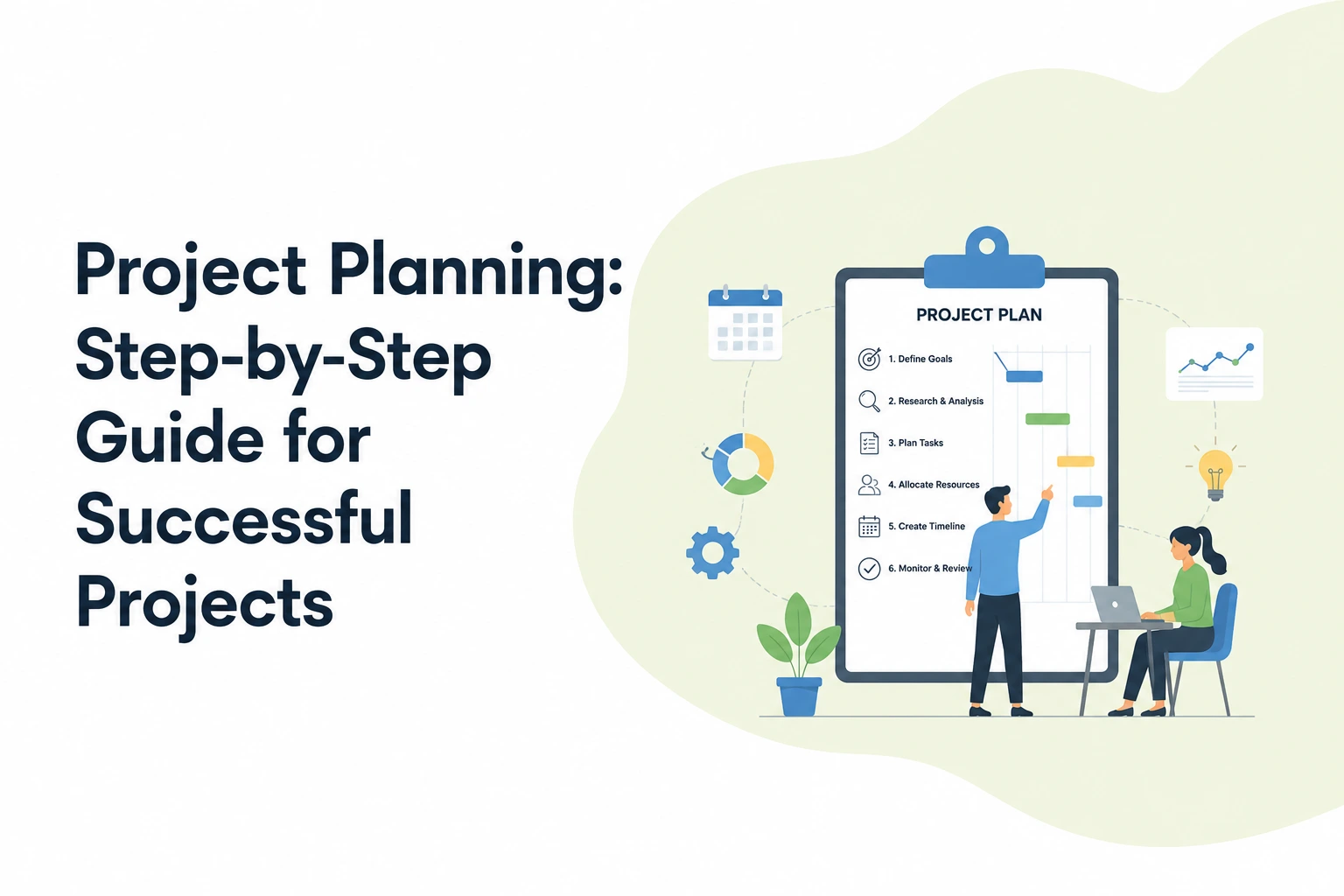
How Do You Build a People-First Project Plan in 7 Simple Steps?
You build a people-first project plan by defining clear goals, mapping out deliverables, estimating realistic timelines, assigning tasks based on actual capacity, establishing communication channels, identifying risks, and setting up ongoing tracking.
Building a plan should not feel so overwhelming. When you put your team’s actual capacity at the center, execution feels smooth and natural.
[Define Goals] >> [Map Deliverables] >> [Schedule Tasks] >> [Balance Resources] >> [Set Communication] >> [Mitigate Risks] >> [Track Progress]
Defining Clear and Actionable Project Goals
Start by clarifying what success looks like for this specific project. Use the SMART framework (Specific, Measurable, Achievable, Relevant, Time-bound) to keep your targets grounded.
- Align Stakeholders: Make sure every department head agrees on the core metrics before starting work.
- Set Clear Boundaries: Outline scope limits early so team members can easily push back against scope creep.
- Document Deliverables: Keep a central list of concrete outputs, so everyone knows what “done” means.
Map Out Deliverables and Milestones
Break big objectives down into smaller, manageable chunks. This makes complex initiatives much less intimidating for your team.
- Work Breakdown Structure: Split big outcomes into bite-sized, actionable task lists.
- Key Milestones: Mark major checkpoints along the timeline to celebrate quick wins and track momentum.
- Dependency Mapping: Identify which tasks depend on others, so your workflow never hits a standstill.
Master Project Scheduling Without Overworking Your Team
Creating a realistic timeline requires looking at historical data and actual team availability. Never build a schedule assuming 100% of ideal conditions.
- Buffer Time: Build in cushion room for unexpected reviews, feedback loops, or technical glitches.
- Realistic Estimates: Ask the people doing the actual work on how long tasks take instead of assuming.
- Visual Timelines: Map out timelines clearly, so dependencies are visible immediately.
Balance Resource Allocation and Workloads
Overloading your best talent is a fast track to project failure and high turnover. Make sure workload distribution matches actual capacity.
- Capacity Planning: Check commitments before assigning deliverables to team members.
- Cross-Training: Spread critical responsibilities across multiple people to avoid operational single-point failures.
- Unified Visibility: Use smart systems like Procxo to track resource effort alongside integrated timesheet management software.
Establish a Smooth Project Workflow and Communication System
Organize daily updates so your team spends less time talking about work and more time doing it. Set clear rules for synchronous vs. asynchronous updates.
- Centralized Hubs: Keep project chats, documents, and updates inside one shared platform.
- Status Cadence: Replace long, boring status meetings with brief, focused async check-ins.
- Feedback Loops: Set clear expectations for approval of turnarounds to avoid unnecessary stopping points.
Identify and Mitigate Potential Project Risks
Proactive risk planning protects your project budget and delivery dates before problems arise. Spend time brainstorming what could go wrong before launching.
- Risk Register: Log potential risks alongside their likelihood and monetary impact.
- Contingency Plans: Outline actionable responses for your highest-priority risk scenarios.
- Regular Reviews: Revisit risk logs weekly to catch emerging blockers before they derail work.
Monitor Progress and Adapt Changes in Real Time
Even the best plans need adjustments as added information comes in. Set up simple tracking methods to stay agile without losing control.
- KPI Tracking: Monitor completion rates, budget burn, and project velocity consistently.
- Change Control: Require clear reviews for major scope adjustments to protect team capacity.
- Continuous Alignment: Re-align teams quickly whenever priorities shift to keep everyone focused on real impact.
With a practical 7-step strategy ready to go, the final piece of the puzzle is selecting software that ties everything together.
How Do You Choose the Right Project Planning Tools for Your Team?
Choose tools that easily integrate into your existing operational stack, offer clean interface designs, support real-time data sync, and fit your team’s specific working style. The goal is to unify your workflow, not add another disjointed app.
The market is flooded with software promising to fix your productivity overnight. However, adding isolated apps often creates data silos and double data entry across finance, operations, and procurement.
What Should You Look for in a Business Tool Stack?
The best software connects your existing systems into an intelligent operational ecosystem.
- Smooth Integration: Look for solutions that connect with your core ERP, finance, and enterprise apps effortlessly.
- Financial Synchronization: Ensure your tools connect task tracking directly with real-time budget and invoice management.
- Audit-Ready Accuracy: Pick systems that simplify compliance, contract lifecycle management, and record-keeping without extra administrative work.
This is where a unified platform integration like Procxo helps. Instead of replacing your stack, it connects your existing tools into an intelligent ecosystem. This helps in aligning project management, timesheets, and financial visibility with zero double data entry. Selecting connected tools ensures your planning framework scales effortlessly alongside your growing business.
Conclusion
Mastering project planning is not about creating rigid, overly complicated records, and documentation. It is about building a clear, adaptable roadmap that empowers your team to do their best work without stress. By taking a structured, people-first approach and supporting your team with a connected operational ecosystem, you turn project execution into a predictable engine for business growth.
FAQs
The main purpose is to establish clear direction, align team resources, control project costs, and manage operational risks. It ensures business goals are met predictably and efficiently.
Focus on essential deliverables, use historical data to set realistic schedules, and track resource hours carefully. Unified tools help prevent budget overruns by giving you real-time visibility into operational spending.
Yes. A project roadmap is a strategic overview for executives and stakeholders. A project schedule details daily tasks, precise dates, dependencies, and individual assignments for the team.
Define your project scope explicitly during step one. Require formal review and approval for any requested additions and always adjust timeline and budget expectations whenever scope changes.
Projects usually fail due to unrealistic timeline estimates, poor communication, unaligned stakeholders, or disconnected software tools. These factors hide true operational obstacles until it is too late.

Latest Blogs

16th September, 2026