-
Solutions

Timesheets Management
Stop leaving money on the table. Procxo's AI integrated time tracking operates in the background.
Project Management
Procxo connects all the work your team does with the money your firm makes. Manage your deadlines, assignments, and budgets.
Invoice Management
Turn days of manual reconciliation into a single click. Procxo works in the background to automatically.
Contract Lifecycle Management
Accelerate negotiations, govern service level agreements (SLAs), and execute agreements flawlessly. Procxo unifies drafting.
-
Resources
Blogs
Read our latest insights, articles, and updates. Stay informed with industry trends and perspectives.
Case Studies
Explore real examples of our work and impact. See how we solve complex challenges.
Why Procxo
Built to streamline projects, billing, and financial workflows. Helping service professionals work smarter and grow faster.
FAQs
Browse answers to frequently asked questions. Find clear information about our services and processes.


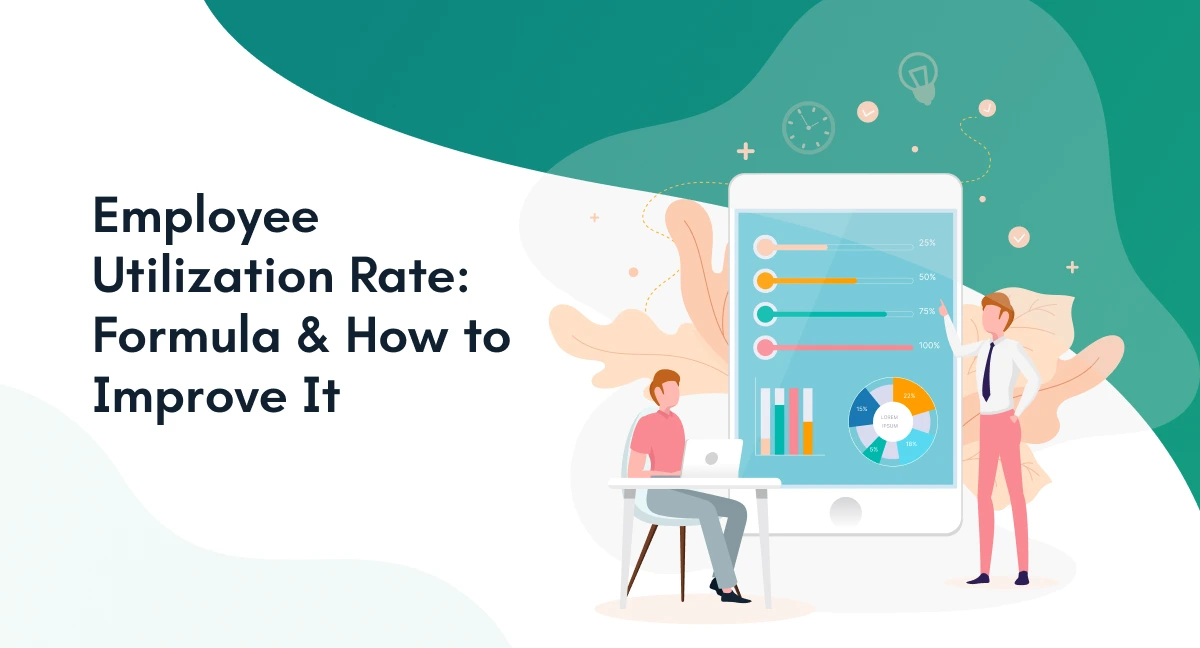
Are your team members working productively? Or are they stuck doing administrative tasks?
In project-based businesses, employee capacity directly affects delivery efficiency and profitability. When teams spend too much time on administrative work, unplanned tasks, or poorly allocated projects, valuable capacity can go unused.
Disconnected systems waste billable hours on repetitive administrative work. In such cases, measuring workforce utilization tracks daily time allocation accurately. It helps leaders spot capacity losses before project margins shrink. Clear visibility turns unorganized scheduling into strategic, profitable growth.
This guide explains the employee utilization rate formula, realistic benchmarks, and key calculation steps. We will also explore actionable strategies to improve employee utilization rate, balance billable utilization, boost employee productivity, and optimize task management.

What Is an Employee Utilization Rate?
The employee utilization rate measures the percentage of available working time spent on productive tasks. It shows how effectively an organization leverages its overall employee capacity. Higher utilization means more time goes toward strategic project work instead of idle, non-essential tasks.
However, utilization does not mean keeping people busy every second. Busywork does not drive business growth. Tracking this metric gives managers clear visibility into operational efficiency. It highlights how effectively teams deliver assigned tasks. High employee productivity requires a sustainable balance between billable work and internal overhead.
Why Is Employee Utilization Rate Important?
Managing capacity requires continuous visibility into team performance. Tracking the employee utilization rate helps organizations protect margins, balance workloads, and plan growth.
Drives Accurate Revenue Forecasting
Unplanned bench time lowers your top-line revenue. Accurate workforce utilization data helps managers predict future resource availability. According to research published by the Harvard Business Review, aligned workload capacity directly improves project margin forecasting and delivery times.
Prevents Employee Overwork and Burnout
Tracking capacity highlights overworked employees early. Pushing teams past reasonable limits drops overall employee productivity. Balanced workloads keep burnout low and overall job satisfaction high.
Optimizes Strategic Resource Allocation
Unbalanced assignments mean some workers face burnout while others stay idle. Effective team task management places the right people on the right jobs. It prevents skill bottlenecks across fast-paced projects.
Maximizes Overall Project Profitability
Non-billable administrative tasks consume margin quickly. Tracking billable utilization helps teams catch excessive internal tasks. Uncovering hidden inefficiencies protects project profit margins over time.
In the next section, we’ll learn about the detailed formula of employee utilization.
What Is the Employee Utilization Rate Formula?
To calculate the metric, divide productive hours worked by total available working hours, then multiply by 100.
The standard employee utilization rate formula is:
| Employee Utilization Rate = | ( | Productive Hours Available Working Hours | ) × 100 |
Defining Key Calculation Terms:
- Productive Hours: Time spent on billable client work, essential internal projects, or revenue-generating activities.
- Available Working Hours: Total potential work hours, excluding official company holidays and approved paid time off (PTO).
Organizations must define productive work clearly. Unclear definitions alter team data, creating misleading productivity reports.
Consider the following example.
Consider Sarah, a software engineer at a mid-sized IT consulting firm. Her total available hours in a month are 160 hours. The time spent on approved client projects is 120 hours. Plus, time spent on internal meetings, administrative tasks, and training is 40 hours
Now, using the employee utilization rate formula:
Sarah’s employee utilization rate for the month is 75%. The remaining 25% went to non-billable, internal business support tasks.
How to Calculate Employee Utilization Rate Step-by-Step?
How can you calculate this metric consistently across teams? Follow these four straightforward steps.
Step 1: Calculate Available Hours -> Step 2: Track Productive Hours -> Step 3: Apply the Formula -> Step 4: Analyze Trend
- Calculate Available Working Hours: Start with total potential capacity (e.g., 40 hours per week). Subtract national holidays and approved employee leave.
- Track Productive or Billable Hours: Record actual hours spent on core client deliverables or strategic internal work.
- Apply the Formula: Divide productive hours by total available working hours, then multiply by 100.
- Analyze Historical Trends: Track results weekly and monthly. Do not rely on isolated single-day snapshots.
What Are Common Mistakes When Measuring Employee Utilization?
Measuring capacity improperly creates inaccurate data and lowers workforce morale. Here are common pitfalls to avoid:
- Treating 100% Utilization as the Ideal Goal: Aiming maximum output constantly creates extreme burnout. According to data from Gallup, employee burnout costs businesses significantly in lost productivity and unwanted turnover.
- Ignoring Necessary Non-Billable Work: Internal meetings, skill training, and administrative tasks remain necessary for business health.
- Relying on Manual or Inaccurate Time Entries: Delayed timesheet submission causes errors. Untracked hours distort your baseline workforce utilization of metrics.
- Focusing Exclusively on Individual Metrics: Ignoring wider team dynamics causes poor workflow distribution. Always evaluate individual data within a broader task management context.
- Using the Same Benchmark for Every Role: A salesperson, consultant, engineer, manager, and HR professional won’t have the same utilization expectations.
How Does Employee Utilization Compare to Other Metrics?
Understanding differences between capacity metrics helps managers evaluate performance accurately.
| Metric | Primary Focus | Main Goal | Typical Audience |
| Employee Utilization Rate | Percentage of available hours spent on productive work. | Measures individual working capacity and focus. | Project Managers & Team Leads |
| Workforce Utilization | Total capacity usage across teams, departments, or companies. | Evaluates organizational efficiency and headcounts. | Operations & Executive Leadership |
| Billable Utilization | Percentage of available hours billed directly to clients. | Measures client revenue generation efficiency. | Finance & Professional Services |
What Is a Good Employee Utilization Rate?
There is no universal target for all businesses. For many project-based and professional services organizations, utilization targets may fall around 70%-80%, although the appropriate benchmark varies by role, business model, and how productive time is defined.
Target benchmarks vary based on roles, seniority, and business models:
- Billable Consultants & Engineers: 75% – 85%
- Senior Managers & Directors: 40% – 60% (due to strategic administrative demands)
- Internal Operations & HR Teams: Focused on internal outputs rather than billable ratios.
Aiming above 85% consistently drains employee energy. Teams need time for skill development, internal administrative processes, and team collaboration.
Source: Harvest

What Factors Affect Employee Utilization Rate?
Multiple factors influence daily team capacity and employee productivity:
Skill-to-Project Matching
Unaligned assignments slow execution down significantly. Placing employees on tasks outside their core strengths creates friction and delays. Matching projects to specific skill sets helps teams work more efficiently.
Excessive Administrative Burden
Manual reporting eats up valuable billable availability every day. Employees lose critical productive hours filling out tedious documentation and redundant logs. Automating administrative tasks protects time for high-value client work.
Unplanned Work and Disruptions
Constant task-switching destroys momentum and focus. Unexpected interruptions break concentration, forcing employees to spend extra time regaining context. Minimizing ad-hoc distractions preserves flow and keeps deliverables on schedule.
Inaccurate Time Tracking
Poor tracking hides actual productive work and skews capacity data. Late or estimated time logs create inaccurate records that distort true performance metrics. Real-time entry ensures leaders have reliable data for decision-making.
Flawed Project Forecasting
Weak pipeline visibility leaves valuable staff on the bench. Without accurate demand forecasts, managers cannot predict future workload needs effectively. Clear pipeline forecasting prevents sudden resource shortages and idle employee bench time.
How to Improve Employee Utilization Rate?
How can managers optimize capacity without overworking their teams? Here are eight actionable strategies to improve employee utilization rate.
Strategy Focus Areas
1. Capacity & Scheduling
• Master Capacity Planning
• Align Skills to Tasks
2. Operations & Technology
• Reduce Administrative Overhead
• Deploy Integrated Automation
3. Analytics & Balance
• Monitor Real-Time Dashboards
• Manage Task Workflows
• Maintain Workload Balance
• Improve Time Entry Accuracy
Master Capacity and Demand Planning
Forecast pipeline demands early to match project workloads against available staff hours. Accurate planning reduces sudden bench time and avoids last-minute overwork.
Allocate Resources Based on Skills
Assign tasks based on current availability and precise skill sets. Proper alignment ensures smooth team task management and prevents project delays.
Eliminate Manual Administrative Work
Automate repetitive administrative workflows. Manual timesheets and disconnected financial reporting waste productive hours. Integrated software unifies timesheet management, project tracking, invoicing, and contract lifecycles directly within existing ERPs. Eliminating double data entry frees up valuable billable hours.
Monitor Utilization Data in Real Time
Use real-time operational dashboards to identify underutilized staff quickly. Catching workload imbalances early keeps overall workforce utilization steady across all active projects.
Organize Daily Task Management
Unclear project structures lead to wasted efforts. Utilizing centralized software for task management keeps deliverables clear, structured, and easily trackable.
Balance Billable and Internal Work
Ensure employees have dedicated time for administrative growth, training, and team meetings. High billable utilization should never compromise long-term professional development.
Address Workload Imbalances Proactively
Reassign tasks whenever team members face burnout. Moving assignments smoothly across teams sustains long-term employee productivity.
Elevate Time Tracking Accuracy
Simplify how teams log daily work. Flexible, frictionless time tracking ensures your underlying data stays complete, compliant, and ready for audit.
How Does Integrated Technology Boost Utilization?
Disconnected business tools split operations into isolated data silos. Employees spend hours re-entering timesheet data across different accounting, invoicing, and project management platforms.
Procxo connects your existing tools into a single, intelligent ecosystem. By effortlessly integrating with leading ERPs and enterprise software, Procxo automates timesheet tracking, contract management, and project invoicing. Real-time data synchronization eliminates manual effort, maintains audit compliance, and directly boosts your overall employee utilization rate.
Conclusion
Measuring your employee utilization rate is about spending working hours intentionally, not squeezing out every single minute. Balancing operational tasks with client commitments builds a stable, highly efficient organization.
By applying the employee utilization rate formula, leveraging automated timesheet management, and focusing on balanced workforce utilization, businesses increase profitability while protecting team morale. The goal is not to maximize utilization at any cost. It is to make better use of available capacity, reduce avoidable administrative work, and ensure the right people spend their time on the right work.
FAQs
Employee utilization rate measures the percentage of an employee’s total working time spent on productive or revenue-generating activities. It helps organizations assess capacity efficiency, manage project resources, and track operational health.
A healthy target typically ranges between 70% and 80% for many project-based businesses. Setting targets above 85% may increase the risk of burnout, reduce work quality, and affect long-term employee retention.
Utilization measures the total quantity of time spent on productive tasks against available capacity. Productivity measures the actual output, results, or value delivered during those active working hours.
You can improve employee utilization rate by aligning task management, automating manual administrative routines, balancing team workloads, and using integrated timesheet software like Procxo to eliminate double data entry.
Healthy utilization can improve project economics by reducing avoidable idle capacity while maintaining enough time for essential non-billable work.
Employee utilization measures human capacity and workforce hours. Resource utilization is broader, measuring how efficiently a company uses physical assets, equipment, software, and human labor.