-
Solutions

Timesheets Management
Stop leaving money on the table. Procxo's AI integrated time tracking operates in the background.
Project Management
Procxo connects all the work your team does with the money your firm makes. Manage your deadlines, assignments, and budgets.
Invoice Management
Turn days of manual reconciliation into a single click. Procxo works in the background to automatically.
Contract Lifecycle Management
Accelerate negotiations, govern service level agreements (SLAs), and execute agreements flawlessly. Procxo unifies drafting.
-
Resources
Blogs
Read our latest insights, articles, and updates. Stay informed with industry trends and perspectives.
Case Studies
Explore real examples of our work and impact. See how we solve complex challenges.
Why Procxo
Built to streamline projects, billing, and financial workflows. Helping service professionals work smarter and grow faster.
FAQs
Browse answers to frequently asked questions. Find clear information about our services and processes.


Summary:
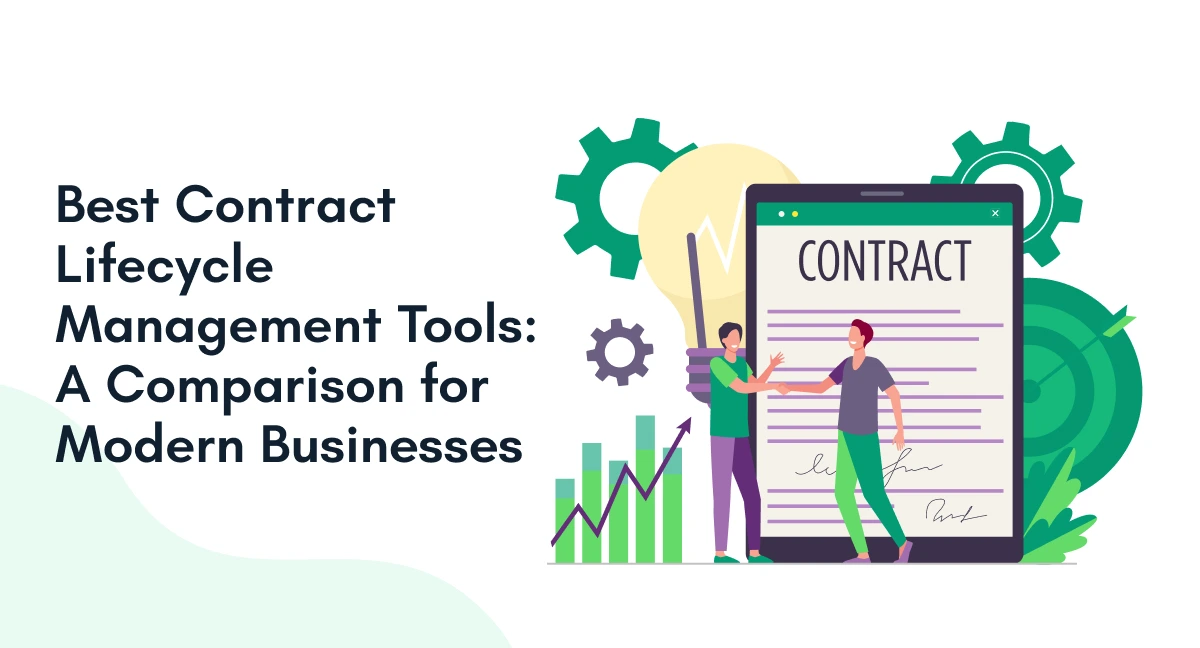
Contract lifecycle management tools help businesses manage agreements from creation and negotiation to signing, renewals, and ongoing obligations. This guide compares six platforms and explains how professional services firms can evaluate CLM software alongside project delivery, timesheet, and invoice workflows.
KEY TAKEAWAYS
✓
✓
✓
✓
Contracts influence project scope, commercial commitments, compliance, and revenue. Yet many businesses still manage agreements across disconnected documents, email threads, spreadsheets, and finance systems.
The challenge does not end when a contract gets signed. Teams must also track obligations, approved work, billing terms, amendments, and renewal dates.
According to World Commerce & Contracting research, poor contract management erodes an average of almost 9% of annual revenue in value. This highlights why businesses need to manage contracts beyond the signing stage.
The right contract lifecycle management tools help teams maintain control over agreements while giving stakeholders better access to relevant information.
What Should Businesses Look for in Contract Lifecycle Management Tools?
Contract lifecycle management (CLM) software manages agreements across their lifecycle, from drafting and negotiation to execution, storage, and ongoing obligations.
When comparing contract management tools, businesses should evaluate:
- Contract creation: Templates, clause libraries, and document generation.
- Review and approvals: Version control, redlining, and approval routing.
- Contract repository: Searchable records, access controls, and audit trails.
- Contract automation: Renewal alerts, workflow triggers, and routine task automation.
- Integration: Connections with CRM, ERP, finance, and project management systems.
- Post-signature visibility: Tracking obligations, milestones, amendments, and commercial terms.
The most suitable platform depends on which of these capabilities your business needs and how well they fit existing processes.

Which Contract Lifecycle Management Tools Are Worth Comparing?
Different platforms serve different contracting needs. Here’s how six options compare.
DocuSign CLM: For Digital Agreement Workflows
DocuSign CLM suits businesses looking to extend digital agreement processes beyond electronic signatures. Buyers should assess its contract creation, workflow, repository, and post-signature capabilities against their requirements.
Consider it if your organization already relies on DocuSign and wants a more connected agreement process.
Conga CLM: For Complex Commercial Processes
Conga CLM supports contract creation, negotiation, approvals, centralized storage, obligation management, and reporting. Its integration capabilities can be useful for businesses connecting contracts with broader commercial operations.
Consider it if your teams manage complex sales or commercial agreements and need configurable workflows.
Ironclad: For Workflow-Focused Contract Management
Ironclad focuses on digital contracting workflows, collaboration, and contract operations. It can suit organizations seeking structured processes between legal teams and business stakeholders.
Consider it if contract requests, reviews, and approvals involve several departments.
Juro: For Browser-Based Contract Collaboration
Juro provides a digital workspace for creating, negotiating, and managing agreements. Its browser-based approach can appeal to teams that want stakeholders to collaborate without relying heavily on separate document workflows.
Consider it if ease of collaboration and digital contract creation are key priorities.
Icertis: For Enterprise Contract Governance
Icertis focuses on enterprise contract lifecycle management, including complex agreements, obligations, and governance requirements. Large organizations can evaluate it for managing contracts across business units and commercial relationships.
Consider it if your organization handles extensive contract portfolios with demanding governance needs.
Procxo: For Connected Professional Services Workflows
Procxo takes a professional services automation (PSA) approach, connecting contract lifecycle workflows with project management, timesheet management, and invoice management.
For service businesses, contract terms affect more than legal approvals. They influence project scope, billing arrangements, approved hours, and financial reporting. Keeping these workflows connected can help teams reduce duplicate data entry and maintain more consistent operational and financial records.
Consider it if your business wants contract workflows connected with project delivery and financial operations, rather than evaluating contract administration in isolation.
Procxo is not a like-for-like replacement for every specialist enterprise CLM platform. Buyers should verify the specific contract authoring, negotiation, repository, and compliance features they require.
How Do These Contract Management Tools Compare?
| Tool | Best-fit use case | Main evaluation focus |
| DocuSign CLM | Digital agreement workflows | Signing and lifecycle coverage |
| Conga CLM | Complex commercial processes | Workflow configuration and integration |
| Ironclad | Cross-functional contracting | Collaboration and approvals |
| Juro | Digital-first contract teams | Browser-based collaboration |
| Icertis | Enterprise contract portfolios | Governance and obligations |
| Procxo | Professional services operations | Contract-to-delivery and financial workflows |
Note: This is a use-case comparison, not an overall ranking. Confirm available features, integrations, implementation requirements, and pricing directly with each vendor before making a decision.
What Are the Best Contract Lifecycle Management Tools for Professional Services?
Which CLM software works best for professional services firms?
The best choice depends on whether a firm primarily needs legal contract governance or wants agreements connected with project execution and financial operations.
Consulting firms, IT service providers, agencies, and accounting firms often manage engagement letters, master services agreements (MSAs), and statements of work (SOWs). These documents establish the scope, deliverables, billing terms, and responsibilities that teams must follow throughout an engagement.
A useful evaluation should consider whether the platform helps teams:
- Track contract terms against project scope and deliverables.
- Monitor approved hours and billing arrangements.
- Identify amendments that affect active engagements.
- Maintain visibility into invoicing and financial commitments.
Procxo is relevant for firms looking to connect contract workflows with project, contract automation, timesheet, and invoice management. This approach helps operational and finance teams work with more consistent information as projects progress.

How Should You Choose the Right CLM Software?
Before shortlisting a platform, consider these questions:
How complex are your contracts?
Basic agreements may need simpler tools than multi-party enterprise contracts.
Which systems must connect?
Review compatibility with your CRM, ERP, accounting, and project systems.
What happens after signing?
Check how the software supports obligations, amendments, renewals, and operational follow-through.
What will implementation involve?
Assess migration, configuration, training, and ongoing administration.
Can you demonstrate the workflow?
Test a real contract from initiation through approval, execution, and post-signature management.
The objective is to choose software that fits how your organization works, not simply the platform with the longest feature list.
Conclusion
Before making a decision, businesses should:
- Compare the contract capabilities they need.
- Check integrations with existing business and finance systems.
- Evaluate post-signature tracking and financial visibility.
- Consider how contract workflows affect project delivery and billing.
- Test the complete process before committing to a platform.
For professional services firms, contracts are closely tied to delivery commitments and revenue. Procxo offers an option for businesses seeking to connect contract lifecycle workflows with project, timesheet, and invoice management. This way, Procxo serves as one of the best contract lifecycle management tools for professional services.
FAQs
DocuSign CLM, Conga CLM, Ironclad, Juro, and Icertis are options for different contracting requirements. Procxo is also worth evaluating when professional services businesses want contract workflows connected with project and financial operations.
The best option depends on contract volume, complexity, budget, and available administrative resources. Smaller businesses may prefer simple templates, approval workflows, searchable storage, and renewal reminders without paying for enterprise capabilities they do not need.
Contract automation can support document generation, approval routing, reminders, and renewal workflows. It reduces repetitive administrative work, while human review remains important for complex terms, exceptions, and legal decisions.
The terms often overlap. CLM software generally covers more stages of an agreement’s lifecycle, while some contract management tools focus mainly on document storage, electronic signatures, or specific administrative tasks.