-
Solutions

Timesheets Management
Stop leaving money on the table. Procxo's AI integrated time tracking operates in the background.
Project Management
Procxo connects all the work your team does with the money your firm makes. Manage your deadlines, assignments, and budgets.
Invoice Management
Turn days of manual reconciliation into a single click. Procxo works in the background to automatically.
Contract Lifecycle Management
Accelerate negotiations, govern service level agreements (SLAs), and execute agreements flawlessly. Procxo unifies drafting.
-
Resources
Blogs
Read our latest insights, articles, and updates. Stay informed with industry trends and perspectives.
Case Studies
Explore real examples of our work and impact. See how we solve complex challenges.
Why Procxo
Built to streamline projects, billing, and financial workflows. Helping service professionals work smarter and grow faster.
FAQs
Browse answers to frequently asked questions. Find clear information about our services and processes.


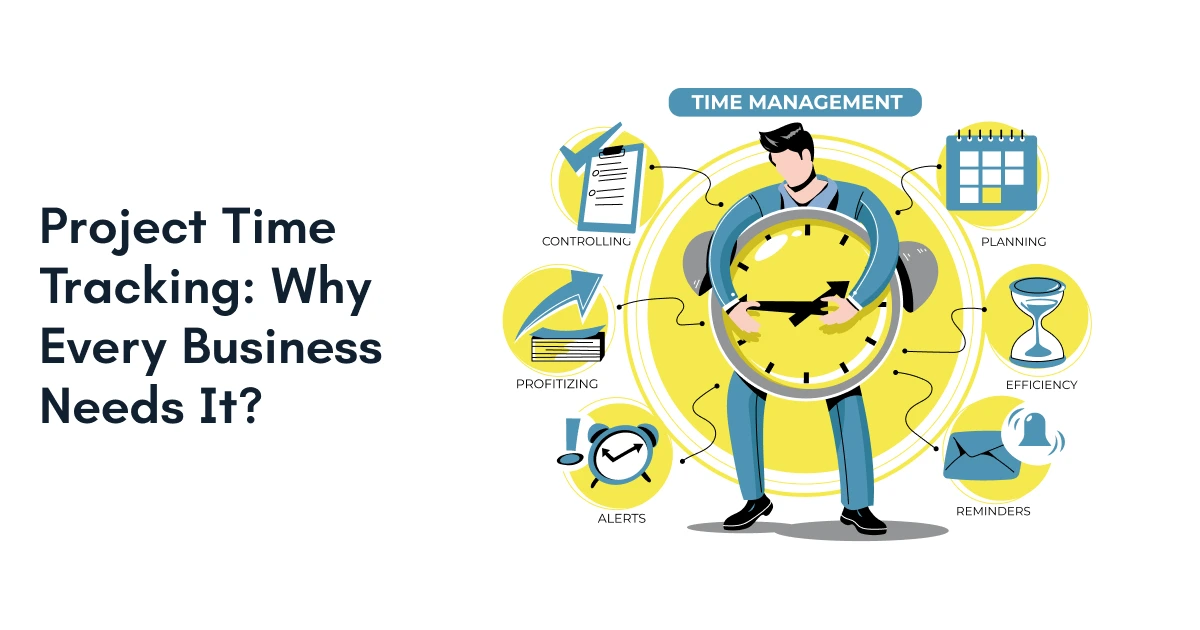
Ever wonder where the workweek goes? Your team is busy. The tasks are finished. Yet, project budgets vanish fast, and profit margins shrink without warning. Managing modern teams is not easy. You juggle remote staff, shift client deadlines, and scattered spreadsheets. When hours go unrecorded, money goes straight out of your business.
That is where project time tracking steps in to achieve healthier profit margins. It isn’t about watching every single click on a keyboard. It is about getting real visibility so your agency or enterprise can thrive.
Key Takeaways
- Stop Profit Leaks: Tracking uncovers hidden work and captures lost billable hours.
- Smarter Estimates: Historical hours give you exact data to price future work accurately.
- Aligned Systems: Syncing time with ERPs prevents double data entry and audit risks.
- Better Team Balance: Accurate data prevents burnout and optimizes workload distribution.
What Is Project Time Tracking?
Project time tracking is the business practice of recording hours spent on specific client tasks or internal deliverables. Unlike basic attendance tracking, it connects logged labor directly to project milestones, budgets, and operational costs.
This process helps companies capture billable hours, prevent budget overruns, and understand true resource costs across all active operations.

How Does Reducing Hidden Time Waste Improve Your Profit Margins?
Hidden time waste bleeds profits because untracked administrative tasks, scope creep, and unrecorded overtime slowly eat into your margins. Without precise data, you end up underbilling clients and overpaying labor. Tracking fixes these hidden budget loopholes immediately.
Most business leaders notice revenue drops long after the damage happens. You feel like everyone is working hard, but the outcome paints a different picture.
The Hidden Trap of Scope Creep
Scope creep happens when small client requests pile up unnoticed over time. Without tracking, these extra requests stay free, draining your resources. Recording every minor task ensures you charge for all work delivered.
Lost Revenue from Manual Logs
Paper notes and delayed entries lead to missing hours every week. Employees forget small tasks if they fill out logs at Friday’s end. Daily recording keeps financial records complete and accurate. These are a few of the common loopholes:
- Administrative Overhead: Uncaptured time spent drafting emails or sitting in internal status updates.
- Inaccurate Client Billing: Forgetting short revisions that add up to hours of lost income.
- Overworked Teams: Staff taking on unpaid work that dilutes project profitability.
[Untracked Scope Creep] + [Manual Log Errors] = Significant Uncaptured Revenue
To stop these hidden loopholes, you must compare how team time is spent across different operational methods.
Traditional vs Modern Tracking Approaches
| Operational Metric | Manual Spreadsheets | Standalone Tracking Apps | Integrated Platform |
| Data Accuracy | Low (Frequent human error) | Moderate (Siloed data) | High (Real-time sync) |
| Audit Readiness | Poor (Hard to verify) | Fair (Requires exports) | Instant (Integrated logs) |
| Double Data Entry | High (Repetitive typing) | Medium (Manual sync) | Zero (Automated flows) |
| Margin Visibility | Delayed by weeks | Partial project view | Immediate real-time ROI |
How Does Project Time Tracking Fix Disconnected Workflows?
Project time tracking fixes disconnected workflows by centralizing time data directly into your core accounting, ERP, and operations software. It removes data silos and manual handoffs. This gives leadership a clean, unified view of operational costs and project progress. When software tools do not talk to each other, team productivity slows down fast. Re-keying numbers from one app to another wastes time and creates critical mistakes. This is how project time tracking fixes various challenges involved in the process.
Bridging the Gap Between Time and Finance
Time logs should flow directly into your financial reporting tools without friction. Manual transfers cause delays that make weekly financial reports inaccurate. Connecting these flows speeds up billing cycles and improves cash management.
Eliminating Duplicate Data Entry
Entering the same work hours into multiple tools frustrates employees daily. Automation handles data syncs so your staff can focus on high-value tasks. Clean integrations ensure your ledger matches your project history automatically. The features you get from project time tracking are:
- Smooth Invoicing: Time entries turn into accurate client invoices with a single click.
- Audit-Ready Accuracy: Verified records remove compliance worries during financial reviews.
- Connected Enterprise Systems: Your timesheets communicate straight with back-office accounting.
Connecting your operational tools sets out a solid foundation for your business growth. Naturally, the next big question is how this data changes your project estimates.
Why Are Accurate Estimates Important for Business Growth?
Accurate estimates fuel business growth by replacing mere assumptions with hard historical data, ensuring every project quote guarantees healthy profit margins. Knowing past effort helps you set realistic timelines, negotiate better retainers, and land profitable contracts. Bidding on new projects can feel like a game of chance. If you quote too high, you lose the client; quote too low, and you end up working for free. Here’s how data estimates help teams achieve healthier profit margins.
Grounding Proposals in Historical Data
Past performance records show exactly how long complex deliverables take. Reviewing former data prevents underestimating technical tasks in new proposals. Data-backed bids build strong credibility and trust with prospective enterprise clients.
Protecting Margins Against Unexpected Delays
Every project faces unexpected hurdles or feedback rounds during execution. Data shows common friction points, so you can build safe buffers into quotes. This keeps your contracts profitable even when minor client delays crop up. The common benefits include:
- Data-Backed Bids: Quoting proposals using real historical execution time instead of gut feelings.
- Scope Boundary Protection: Defining exact deliverable limits based on past resource usage.
- Predictable Retainers: Structuring monthly agency retainers that cover true operational costs.
Industry Insight:
According to McKinsey, on average, large IT projects exceed their budgets by 45%, take 7% longer than planned, and deliver 56% less value than expected.
Source: McKinsey
This is where project time tracking software for agencies becomes critical. Once your project pricing is accurate, you need to manage your team’s day-to-day workload smoothly.
Can Tracking Employee Hours Improve Team Health and Productivity?
Yes, tracking employee hours improves team health by highlighting unrealistic workloads, preventing burnout, and balancing task distribution fairly. Transparent data helps leaders protect their teams from fatigue while keeping projects on schedule. Burnout happens when managers cannot see who is overloaded until it is too late. Clear work logs give you complete visibility into team capacity. Below are some of the most effective ways to track employee hours.
Spotting Overworked Team Members Early
High-performing employees often take on extra tasks, and it goes unnoticed until they burn out. Time metrics highlight heavy workloads before fatigue impacts work quality. Smart leaders adjust assignments early to maintain team energy and morale.
Balancing Task Allocations Fairly
Uneven work distribution leaves some staff stressed while others sit idle. Live capacity dashboards show who has open bandwidth for incoming tasks. Balanced workloads improve overall team output and build a healthy culture.
- Workload Rebalancing: Shifting active tasks to team members who have available capacity.
- Burnout Prevention: Catching late-night work trends before they cause staff turnover.
- Realistic Scheduling: Setting realistic project deadlines that respect team health and balance.
When team workloads run smoothly, you can focus on building a future-proof technology stack.

What Is the Best Strategy to Implement Time Tracking Effectively?
The best strategy to implement time tracking effectively is choosing a flexible platform that connects into your existing software stack without causing disruption. A smooth rollout focuses on clear team communication, automated workflows, and removing manual entry hurdles. Introducing new operational tools can sometimes trigger friction among employees. Success depends on choosing platforms that make daily logging fast and simple.
Choosing an Integrated Platform over Siloed Tools
Standalone tools create isolated data pockets that require manual cleanup later. A unified system connects project management, contracts, and financial flows. This connected setup gives leadership a complete view of corporate health.
Securing Team Buy-In Through Simplicity
Complicated tools with too many menus discourage daily adoption by employees. Intuitive interfaces allow staff to log hours in just a few clicks. Clear communication helps teams view tracking as a tool for support, not surveillance.
- Frictionless Onboarding: Quick setup that fits existing workflows without long training sessions.
- Automated Data Flow: Direct connections between daily project timesheets and core finance apps.
- Unified Portfolio Insights: Real-time visibility across all active projects, contracts, and teams.
Conclusion
Project time tracking is no longer just an administrative function. It is a strategic capability that improves profitability, forecasting, compliance, and employee well-being. Organizations that combine integrated workflows with accurate time data are better positioned to control costs, deliver projects on schedule, and scale confidently.
At Procxo, we help businesses build this efficient, intelligent ecosystem. Instead of forcing you to replace your entire setup, Procxo works directly with your existing ERPs and finance tools. By unifying your project management, contract lifecycle, invoice handling, and timesheets, our team of experts eliminates double data entry and keeps your financial data accurate and audit-ready.
Here is an overview of how transitioning from basic manual logging to an integrated operational system is a major step. Use this roadmap to guide your team’s digital transformation journey:
[Pain Point: Lost Hours & Siloed Data] >> [Evaluation: Assess Current ERP & Tool Integrations] >> [Selection: Choose Unified Platform (No Double Data Entry)] >> [Outcome: Audit-Ready Accuracy & Optimized Margins]
When evaluating solutions, explore dedicated procurement and timesheet management services to see how connected tools streamline operations across your company.
FAQs
It is the business practice of recording work hours spent on specific tasks or client projects. It helps companies manage budgets, bill clients accurately, and optimize staff output.
It captures all billable hours, prevents unbilled scope creep, and provides precise data for future project pricing. This protects your margins from unexpected cost overruns.
Not if implemented transparently. Focus on using data to balance workloads, prevent employee burnout, and streamline billing, rather than monitoring individual clicks.
Integrated tools automatically synchronize data directly with your ERP, accounting, and invoice systems. This eliminates double data entry, reduces human error, and ensures audit-ready accuracy.

Latest Blogs



16th September, 2026